Monday, February 13, 2017
A Woman Perpetually Falling
In the article we read, a neuroscientist named Paul Bach-y-Rita who investigated an "isolated" research on the plasticity and that neural impulses are more homogeneous that scientists had previously believed. It begins by describing Cheryl, a woman who has been suffering from a disabled connection of her vestibular apparatus sending mixed signals to her brain. Because she has lost the receptors from her spinal cord and into her brain for proper processing, Cheryl suffers from consistent balance issues and often hears ringing in her ears. Bach-y-Rita provided a solution for her by implanting a sensory controller in tongue-- using her mouth fluids to detect where she is in space. What was most surprising form the experiment was not only that the tongue implant significantly improved her sense of balance, but Cheryl's balance continued to improve to the point of normality, even when she did not have the implant inside. Additional research with blind patients, animals, and specificity of brain parts shows that our bodies are primarily controlled by the brain because of how it processes sensory neurons. Our eyes are not the ones necessarily seeing, but rather the information our brains receive through sensory and motor neurons up the spinal cord that tell the brain to see. Bach-y-Rita extended this belief by helping patients who had disabled senses by reconnecting the sensor of that part to a different part of the body that was received by the brain more efficiently. His father was also an example of the re-direction of our brain's signals, as he learned to type again eventually after suffering a stroke. Even though he had a large lesion in his brainstem, Pedro-Bach Rita was still able to regain some of the skills he had lost after his stroke. He concludes his research saying that the brain is able to develop new processing signals over a period of time, and that each part of the brain is not solely reliant of it's own responsibility. Each part has multiple roles in controlling the body and those senses can be manipulated through consistent reconnection and practice.
"These 'secondary' neural pathways are 'unmasked,' or exposed, and, with use, strengthened. This 'unmasking' is generally thought to be one of the main ways the plastic brain reorganizes itself."
The brain is not subject to just one pathway for each sensory neuron, but the path it takes through our brains can be changed and redirected if needed. The plasticity of the neurons allows for those who have suffered form stroke and inhibited senses to regain some abilities through time and persistence.
"It is the recovery of the vestibular function. When she moves her head, she can keep her focus on her target-- the link between the visual and vestibular systems is also recovered."
I had always thought that each part of the brain was responsible for very specific roles and that those neurons traveling to and from those parts could not be as easily rewired to other the parts. Cheryl is an example of the brain can adapt to faulty connections, and still function normally with assistance through her tongue implant.
"This meant that even if speech tended to be processed in the left hemisphere, (as Broca's area) claimed, the brain might be plastic enough to reorganize itself, if necessary."
I had known of people regaining their vision through a special type of glasses or people re-learning how to walk after a serious injury, but I did not know that is was partially due to our brain's ability to redirect the signals, previously destroyed, to another part of the brain that changes to allow us to see or walk again.

Thursday, February 9, 2017
The Clay Brain
In this lab, we use various colored play-doh to mimic and show the different parts of the brain. We used picks and flags to label the smaller parts. Below are two different viewpoints of the brain: left hemisphere along the sagittal plane and the right cerebral hemisphere.


The Woman With a Hole in Her Brain
The article describes a woman who has lived 24 years of her life without a large part of her brain: the cerebellum. Although she had some delays in walking and speech, her overall health was not compensated for and she lived normally for the most part. The cerebellum controls the motor function in your body, therefore, the effects on her body only resulted in those areas. Surprising doctors, this case, like a few others show the significance in the various parts of the brain controlling different aspects of function. This is evident that each part of the brain has it's own contribution to the body's function, and just because you miss one part, doesn't mean your other parts cannot compensate and remain healthy in their function. The brain is not just one central powerhouse for your body, but it is a puzzle of various parts that all control different aspects for your body and functions.
Unlike the women living without a cerebellum, we would be unable to live with our medulla oblongata, an essential part to our brains. The medulla oblongata is located in our brainstem-- in front of the cerebellum. It is considered to be one of the most crucial parts of the brain because it controls functions that are involuntary: breathing, swallowing, circulation of blood, and receiving sensory/motor neurons. Our body would be unable to perform its necessary functions without it, making it a staple to our survival. The medulla oblongata receives neurons through the spinal cord and translates it for the thalamus to process and take action. It controls the major systems in our body: circulation, digestion, and respiration. It would be highly difficult for a person to survive without their medulla olongata because we would be unable to detect certain neurons that control those involuntary functions-- making it very difficult for other parts of the brain to replicate its role.
Thursday, February 2, 2017
Unit 5 Reflection
In Unit 5 we learned about the digestive system, fuel metabolism, diabetes, endocrine system and the lymphatic system. Click here to see a lab about The Digestive System. During the digestive process, our bodies take in food in our mouths, which enters our pharynx and gets pulled down into our esophagus, moving the food to our stomach. It is then churned into chyme which chemically breaks down the food with gastric juices. Then it moves to the small intestines where most chemical digestion and absorption (taking in nutrients) occurs. Enzymes from our pancreas and bile produced in the liver are used to further break down chyme before it enters the large intestine. In the large intestine, food is dried out-- separated into disposable wastes and nutrients that the body can use. The waste then travels into our anus where it is released out of our bodies.


 In the last chapter we focused on the lymphatic system and how the lymphatic structures defend and circulate the body. It's 3 major functions are immunity, lipid absorption, and fluid recovery. The flow begins in the lymphatic capillaries>lymph vessels>lymph nodes. When the "gut wall" is damaged due to inflammation, stress, bacteria, malnutrition, or even food additives-- the bonds weaken and bacteria and partially digested food can enter the blood stream. This can cause autism, Type 1 Diabetes, allergies, and skin inflammations. The lymphatic vessels are like veins and they're moved along my rhythmic contractions of our skeletal muscle pump. Lymphocytes consist of T cell, B cells, and NK cells: all of which identify and inactivate pathogens. Our lymph nodes filters lymph, trapping and destroyed foreign cells with immune cells. Our tonsils act as a trap to foreign particles that are inhaled or ingested. The spleen begins immune response and removes outdated RBCs.

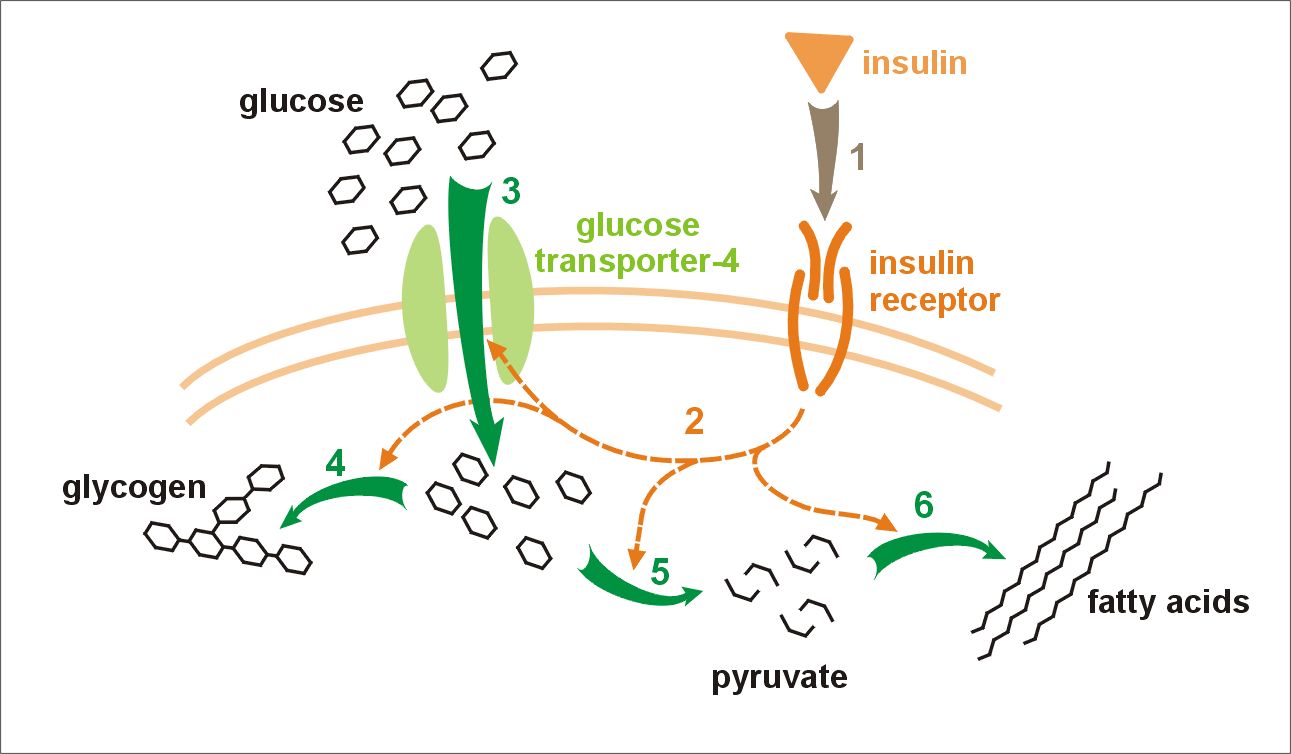
In the second chapter, we focused on fuel metabolism-- how our bodies use certain molecules and biochemical pathways to maintain its energy demands. Our bodies go through 3 stages of taking in energy from the food we eat. In the first stage, large molecules are broken down into smaller ones. [Proteins> amino acids, Polysaccharides>Monosaccharides, Fats> Glycerol/ Fatty Acids] In stage 2, those smaller molecules are turned into Acetyl CoA. In the third stage, our body engages in oxidation of fuel molecules through the Krebs Cycle and ETC (Electron Transport Chain) to create ATP. In the Fed State, glucose in absorbed by intestines into the liver. Simultaneously, the pancreas releases insulin and converts it into glycogen. Excess amino acids are sent to the liver for processing while excess glucose and fatty acids are converted to triglycerides and stored as fat. In the Fasting State, insulin levels drop and glucagon levels rise. Glucogenesis occurs where the liver creates new glucose from amino acids and glycerol. Fatty acids are used by the heart and muscle tissue and glucose is saved for the brain. When carbohydtrate levels are low, the liver converts excess Acetyl CoA into ketone bodies for the Krebs Cycle. When the body reaches the starvation state, the body relies on adipose tissue for energy and the brain relies on ketone bodies for fuel. The Cori Cycle occurs during exercise when lactic acid is released into the blood and liver converts glucose into glucogenesis. Insulin signals high glucose levels and glucagon signals low glucose levels.

In our third chapter, we learned about diabetes and how it is a disruption to fuel metabolism. Our bodies have insulin to unlock our cells and allowing glucose to enter. When this cycle is disrupted, our bodies become insulin dependent, GLUT-4 transportation is transported into muscle and fat cells. Exercise increases the production of GLUT-4 without having to increase insulin levels, which is why diabetics are encouraged to exercise more since their bodies don have normal levels of insulin. Diabetes occurs when our body cannot properly regulate blood glucose levels. Type 1 Diabetes is hereditary, meaning it is inherited by family members and the body is unable to produce insulin, often requiring patients to take insulin shots. Type 2 Diabetes occurs when our cells no longer listen"to the insulin message and produces too much insulin. It can be prevented by frequent exercise and a healthy lifestyle.
In the fourth chapter, we learned about the Endocrine System and how the glands use hormones to control various activities in our body. We have two different types of hormones: steroid hormones and nonsteroid hormones. Steriod hormones are lip soluble and diffuse through cell membranes, while nonsteroid hormones are not lipid soluble and receive receptors externally through the cell membrane. The steroid hormones do this by entering the nucleus to bind the DNA-- activating certain genes. When nonsteroid hormones react with receptors externally, an enzyme reaction occurs that triggers the development of cAMP. Negative feedback is a mechanism our body uses to maintain homeostasis. Our posterior lobe contains ADH which is in charge of fluid retention, while the anterior lobe is a growth hormone that signals puberty. The thyroid gland regulates metabolism and increases protein synthesis, and the parathyroid glands secrete hormones for plasma calcium and phosphate levels regulation. Our fight or flight respose is initiated by epinephrine, while norepinephrine is our "house keeping system." The adrenal cortex is reponsible for secreting 30 different steroids hormones like aldosterone and cortisol. Our pancreas regulates glucose transport, the gonads are our sex hormones, and the kidneys regulate the production of red blood cells.
What I found most successful for me was the supplemental articles we read that went along with our unit. They helped me gain a deeper understanding of the topics through the lens of an author who had their own personal research and discoveries. I found the "Does your Metabolism Need an Overhaul" to be most interesting as it addressed the problem of unused muscle fivers that will negatively affect you health in the future. I learned that it is important to engage in resistance training because sugar is burned in muscle tissue. Resistance training allows your muscles to create a perma-burn which consumes sugar whether you are exercising or just sitting on your couch.
The most challenging aspect of this unit was fully understanding the specific cycles and roles of organs within each chapter. I will need to review fuel metabolism and the chemical sequences behind each state. Although I grasp the big picture of each chapter, I need to refine my understanding of the details of each section and make sure I am certain about that information when entering the test. One of my main goals set in this new year was to be 110% ready going into an exam. I do not want to feel stressed because I did not study, but rather know that I had exerted my fullest potential before and after the exam. Click here to read more about my New Year Goals. I want to learn more about the specific ways people can prevent getting Type 2 Diabetes. Since many cases begin with pre-diabetic patients, what kinds of lifestyles will help to avoid contracting diabetes for those who have a family history or are considered pre-diabetic. Are there specific diets/exercise methods people have tried that successfully prevented diabetes?
Wednesday, January 18, 2017
The Digestive System Lab
In our digestive system lab, we measured the length of our esophagus, stomach, small intestine, and large intestine. We took measurements of each part and used colorful string to represent each stage in our digestion. In taking the lengths of our moth, esophagus, and stomach we used external parts of our body to get as accurate of measurements we could have; our small intestine however is 4 times the length of our body as you can see the white string coiled around itself in the picture below. After doing this project, I realized how much I underestimated the length of my digestive system, as I never thought about the complexity in each organ or step of the process. I knew that my small and large intestine were coiled up inside my body, making them longer than my esophagus which sits straight inside my body, but not until I had to measure 672 cm of white string did I truly notice their extreme length.

I think it takes about 20 hours for food to pass through the entire system. In reality, it takes an average of about 50 hours for our food to entirely pass through our digestive system. When food enters our stomach, acids are produced to process and absorb the nutrients in our food and turn it into a mixture called chyme. Our intestines also absorb nutrients for our body and remove the bacteria and wastes, thus forming stool or feces that leaves the body through the anus.

I want to learn more about what kinds of food affect the travel time and health of my digestive system. In terms of junk food or other sugary foods, what how does our body respond overtime to processing those foods? In comparison I know that fiber helps to wipe out the toxins in our body and travels through our system fairly quickly.
Monday, January 9, 2017
New Year Goals
My SMART goal for this class is to become more comfortable going into exams, and developing better study habits when preparing for tests. I want to be less stressed going into the test and know I have studied to my full potential, and feel confident afterwards of achieving the grade I want. I am setting this goal, not intended as a ¨grade-motivated¨ goal; however I will achieving A in the class would be a indicator of my progress, I will focus on seeing my growth throughout the semester and prepare myself better for other classes as well. Looking back at last semester, I know that I would have had better performance on tests if I dedicated more time to studying effectively and making better use of my time. Leading into my second goal, I will procrastinate less and motivate myself to get things done as soon as possible, instead of stressing myself out till the last minute. I have always had the tendencies to procrastinate my school work until the night before it is due; however, I will alter some things in my environment and study plan to meet this goal.
Action Plan for Studying and Test Performance:
- I will review my test from semester one and see where I missed points the most. Go through the notes I took in preparation and see what worked and what did not.
- I will find an empty notebook or notebooks and dedicate them as my study notebook for all my classes. I have found I enjoy taking notes as review and will spend more energy using this method. Use colorful pens, and sticky tabs to make studying enjoyable and keep me organized.
- I will turn off all distractions when studying: power off my phone, go to the library often to find a quiet place, or the coffee shop.
- For harder subjects or units, I will gather a study group and make flashcards together/ quiz each other/ keep each other motivated while helping each other study.
- Track my test scores in my planner so I can look back at previous grades and continue aiming higher each time.
- I will not beat down on myself when I receive a poor grade, rather go to step one and see what I missed and see how I can fix those gaps or issues.
Friday, December 2, 2016
Unit 4 Reflection
In Unit 4, we focused on Integumentary system, how our physical levels of defense in our body help us to protect and fight against our everyday needs. The skin, is made up of 3 layers: epidermis, dermis, and hypodermis. Our epidermis is composed of stratified squamous epithelium and contains melanin that gives our skin pigment and color. The dermis is the second deepest layer of skin and contains collagen and elastic fibers that keep our skin looking young. As we get older, these fibers decrease causing wrinkles to form. The hypodermis is the deepest layer of our skin and is made of adipose tissue. It makes up our appendages: glands, hair, nails. In our skin, we have 3 cutaneous glands that help maintain the surface of skin. The sebaceous gland kills bacteria and keeps our skin moisturized through it´s production of sebum. The sudoriferous sweat glands produce sweat for thermoregulation and aprocrine that is often found in our genital and armpit area. The ceruminous glands secrete cerumen, the wax that is found in our ears/ ear hair that traps foreign particles.

There are various forms of skin damage including burns, cancer, and moles. Burns are classified into levels (first, second, third) with the first being the lowest damage only to the epithelium and the third resulting in destruction of entire epithelium, numbing all pain receptors. If a mole is malignant, you can test it through the ABCD rule (Asymmetry, Border Irregularity, Color, Diameter).
In our second unit we learned about our bodies' defense against diseases with our non-specific defenses like our skin, mucus membrane, the chemical methods/secretions from our body. Our skin is a physical barrier against bacterial enzymes, and sweat, tears, urine all help flush out invaders or bacteria. Fevers increase our body temperature so that microbes can no longer survive. Our bodies also have specific resistance such as specific immunity which is used to defend one single pathogen. There are 4 types of immunity: Naturally Acquired Active Immunity- antibodies produced through daily life; Naturally Acquired Passive Immunity- often transferred from mother to child; Artificially Acquired Active Immunity- vaccines; Artificially Passive Immunity- received from outside source. In addition, we have T and B cells that respond and attack antigens where our T cells directly attack infections and our B cells multiply themselves in response to antigens.
In our last unit, we learned about cancer and how it is treated. There are two different types of cancers: benign and malignant tumors. Benign tumors are noncancerous and cannot spread, causing them to be easily removed and non recurrent. Malignant Tumors are cancerous and deadly as they send our projections to other tissue that causes spreading of the tumor to other parts of the body. Metastasis is the most dangerous stage of cancer because the cancer cells spread through the lymphatic/circulatory system, harming the rest of the body.
Current treatments for cancer include radiation to destroy tumor cells and chemotherapy which destroys both tumor cells and good cells causing the patient to grow very weak and frail.

The most challenging section from this unit was regarding our body's ways of invading and destroying antigens. The various roles of T cells versus B cells are still confusing and I need to study and clarify their differences. In terms of managing my time, I found in preporation for the debate, I needed time to further research and develop ideas on my own outside of class so that I could present my group and the opposing side with adequate information. I did not really know too much about the organ market before this debate, so I had to first inform myself of the current system. During the actual debate, we argued the side against the position which I partially agreed with, but I didn't ind harder to argue than the side for the motion. Due to the formatting of the debate, I found it hard to fit in some of the points I would have said as a rebuttal to the opposing side's arguments.
I want to learn more about our body's stages of inflammation and how medicines like tylenol and advil reduce our body's reaction. I'm curious about which parts of our body is signaled during that process.
These are my results from The VARK Questionaire:
I want to learn more about our body's stages of inflammation and how medicines like tylenol and advil reduce our body's reaction. I'm curious about which parts of our body is signaled during that process.
These are my results from The VARK Questionaire:
-
Visual: 9
Aural: 12
Read/Write: 6
Kinesthetic: 12
Subscribe to:
Posts (Atom)